Why Chrome can’t drag images from X and other sites to save or open them when they exceed 2.25 million pixels

In Google Chrome 149, users can’t drag and drop images from websites, including X and pixiv, to save them or open them in a new tab.
This bug affects images over 2.25 million pixels. Until the Chromium team ships a fix, you need to save images or open them in a new tab from the right-click menu.
Table of Contents
Chrome bug prevents users from dragging images
Users have run into a bug in Chrome where dragging an image to the desktop or a folder does not save it, and dragging an image to open it in a new tab does not work.
Normally, you can drag an image from a web page to save it or open it in a new tab, but Chrome 149 breaks that behavior.
You can drag, save, and open small images without issue. With larger images, the drag operation fails, and Chrome shows no error.
I reproduced the issue on Windows 11 with Chrome 149.0.7827.115.
In my testing, I found that users can drag, save, and open images up to 2.25 million pixels, but cannot do so with images over that limit.
This bug appears to come from an issue that prevents users from dragging images over 2.25 million pixels.
Because the drag operation itself fails, you cannot save an image by drag and drop or open it in a new tab by drag and drop.
Since this bug comes from Chromium, users can reproduce it not just in Chrome but also in Chromium-based browsers such as Brave and Edge.
Workaround for saving images from the right-click menu
Chromium developers are working on a fix, so they should resolve this bug soon.
Until then, use the right-click menu to save images.
Right-click the image you want to save
Select [Save image as]
Choose a save location and save the image
You can also open an image in a new tab from the right-click menu.
Right-click the image you want to open in a new tab
Select [Open image in new tab]
Cause of the bug in image drag handling
Chromium creates a drag image near the mouse cursor when you drag an image.
For images with large pixel counts, Chromium does not create that drag image. In earlier versions, Chromium continued the drag operation even when it did not create a drag image.
In Chromium 149, a bug causes Chromium to cancel the drag operation when it does not create a drag image. As a result, when you drag an image with a large pixel count, Chromium cancels the drag right away, so you cannot save it or open it in a new tab.
After checking the Chromium source code, I found that Chromium sets the maximum total pixel count for drag images to 1500 × 1500, or 2,250,000px.
Because of this, Chromium creates a drag image for images up to 2.25 million pixels, so you can drag them. For images larger than 2.25 million pixels, Chromium does not create a drag image, cancels the drag, and prevents you from saving the image or opening it in a new tab.
My tests also matched the 2.25 million pixel threshold
I created several dummy images for testing and confirmed that users can drag and save images up to 2.25 million pixels, while images larger than 2.25 million pixels cannot be dragged.
Regardless of file size, I could save a 2250×1000px image, but I could not save a 2251×1000px image.
|
Test image |
Total pixel count |
Result |
|---|---|---|
|
2250×1000 |
2,250,000px |
Can be saved |
|
2251×1000 |
2,251,000px |
Cannot be saved |
The image aspect ratio did not matter.
For example, a 4096×256px image has a long side of 4096px, but its total pixel count comes to about 1.05 million pixels, so I could save it. A 1536×1536px image has a long side of 1536px, but its total pixel count comes to about 2.36 million pixels, so I could not save it.
|
Test image |
Total pixel count |
Result |
|---|---|---|
|
4096×256 |
1,048,576px |
Can be saved |
|
2300×900 |
2,070,000px |
Can be saved |
|
1024×2048 |
2,097,152px |
Can be saved |
|
2048×1152 |
2,359,296px |
Cannot be saved |
|
1536×1536 |
2,359,296px |
Cannot be saved |
|
1800×1400 |
2,520,000px |
Cannot be saved |
The test results showed that Chrome’s drag-to-save behavior fails based on total pixel count, not file size or long-side length.
The boundary I found in testing falls between 2250×1000px and 2251×1000px. This matches the Chromium source code, which shows that Chromium does not create drag images for images over 2.25 million pixels.
My analysis
Many users see this bug as a problem that prevents them from dragging and saving large images, but the actual cause is a drag failure with large images.
Chromium does not create the image shown during dragging for standard images over 2.25 million pixels.
Chromium 148 and earlier continued the drag operation even in that state. In Chromium 149, a refactoring mistake changed the behavior so Chromium cancels the drag operation itself.
Some users report that they cannot save images after enlarging them on X or pixiv, or that saving fails at random, but my testing showed a pattern.
When users view an image without enlarging it, the site likely loads a low-resolution thumbnail. When users enlarge it, the site loads a high-resolution image, and that image may exceed 2.25 million pixels.
Chrome developers are working on a fix, so users should receive a fixed version soon.
Verification details and sources
Verification environment
- OS: Windows 11
- Browser: Google Chrome v149.0.7827.115
Verification details
I reviewed the Chromium source code and confirmed that Chromium does not create drag images for images larger than 2.25 million pixels. I also tested whether images could be dragged under the following conditions in my verification environment, and confirmed that 2.25 million pixels was the actual threshold.
- Changed JPEG quality only for 4K images: checked the effect of file size
- Adjusted 4K images to 100KB-2000KB: checked behavior when changing file size only
- Changed resolution only at about 950KB: separated file size from resolution
- Tested long, narrow images with large long-side lengths: checked whether a long-side threshold existed
- Tested images around 2.25 million pixels: checked the boundary condition
- Tested standard JPEGs and JPEGs whose file size I adjusted with padding: checked the effect of compression method and file size adjustment
Last verification date
Reference links
Share this article
Follow us for updates
Adding us to your preferred sources on Google makes it easier to find our articles on Google. Also, be sure to follow us on X and our RSS feed.


Related articles
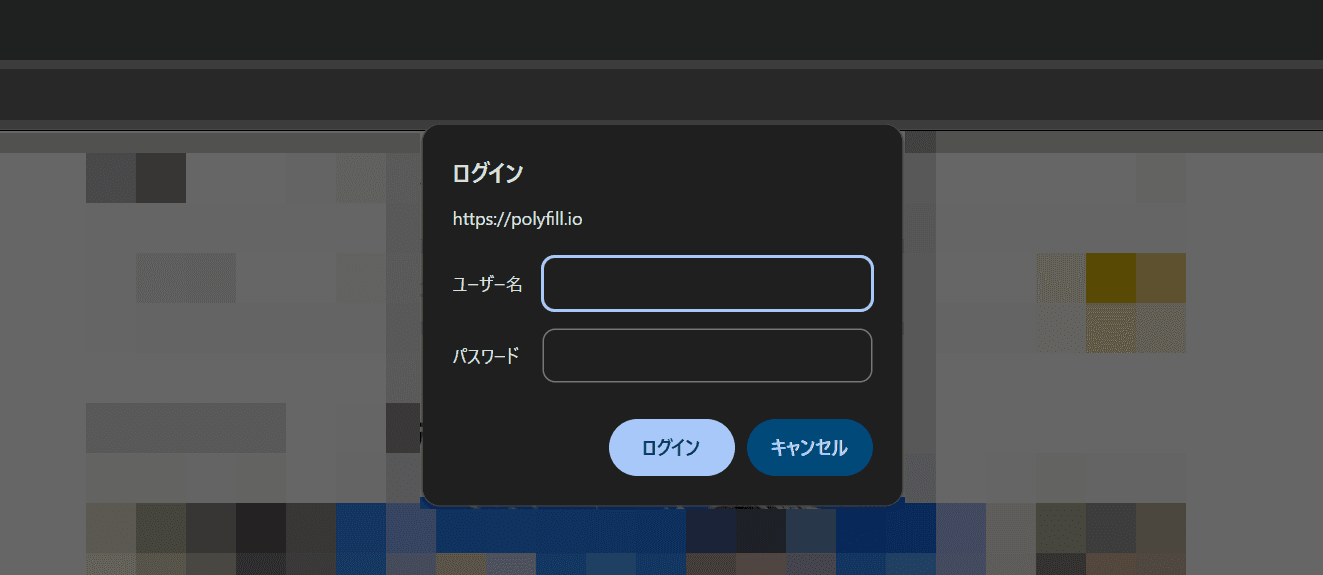
- Why some websites show “polyfill.io requires a username and password,” and what to do: do not enter any information
- How to remove Chrome’s [Ask Gemini] button: steps to hide the distracting button
- Shadowban Scanner has been updated to v4.0
- How to Use "Shadowban Scanner" to Monitor Twitter Shadowbans in Real Time
- Shadowban Scanner v2 is now available to check shadowban and sensitive judgments
-1.png&w=1080&q=75)
I've been using JavaScript more than my native language since birth. I am nowhere and everywhere on the internet.
I build web apps and browser extensions in TypeScript as a web frontend programmer. I released Shadowban Scanner, a tool that detects shadowbans on X, and Restore Link Card, a tool that brings back link cards. Media outlets in Japan and abroad covered both tools. For iGEM 2023, I built the Wiki for Team Japan-United and helped the team win the Grand Prize. On my blog, I cover news about X and social media, test and troubleshoot bugs, and share frontend development insights.
![Screenshot of a Chrome window with an [Ask Gemini] button and a context menu below it showing an [Unpin] option](/_next/image/?url=%2Fapi%2Fmedia%2Ffile%2Fchrome-gemini-unpin-english.png&w=1080&q=75)

![Xのプロフィールで[Videos]タブの下にドロップダウンメニューが表示されている画像](/_next/image/?url=%2Fapi%2Fmedia%2Ffile%2Fx-lite-videos-tab-dropdown-thumbnail.png&w=3840&q=75)



![An image showing a drawer titled [Scheduled post] with a calendar on X’s post screen](/_next/image/?url=%2Fapi%2Fmedia%2Ffile%2Fx-ios-scheduled-post-thumbnail.png&w=3840&q=75)