GitHub Copilot is moving to credit-based billing with a full breakdown of what changes in June

GitHub has announced that, starting on June 1, 2026, GitHub Copilot will move from request-based pricing to credit-based billing based on token usage.
GitHub Copilot usage was measured in units called premium requests, but going forward that system will be replaced by one in which users consume GitHub AI Credits based on the model they use and the number of tokens processed.
Table of Contents
GitHub Copilot is moving to usage-based billing
GitHub has announced that, starting on June 1, 2026, GitHub Copilot will move from request-based pricing to credit-based billing based on token usage.
GitHub Copilot plans have been priced around premium requests included in each plan, with usage determined by the model selected and the number of questions asked.
Under the new pricing structure, premium requests will be discontinued and replaced with a new unit called GitHub AI Credits.
GitHub AI Credits are credits consumed based on token usage, including input tokens, output tokens, and cached tokens, as well as the model being used.
For individual plans such as GitHub Copilot Pro and GitHub Copilot Pro+, users will receive GitHub AI Credits each month equal in value to their monthly subscription fee.
You will still be able to use GitHub Copilot within the limits of your monthly plan, but if you want to go beyond the amount of GitHub AI Credits included, you will need to purchase additional credits.
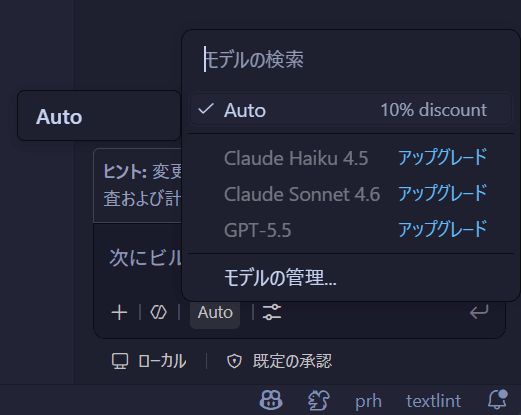
At present, users can sometimes continue working with lower-cost models even after exhausting their premium requests, but after the new billing system takes effect, that fallback will no longer be available. Usage will instead be constrained by administrator budget controls and available credits.
Monthly subscription prices for each plan are not changing, but people who make heavy use of GitHub Copilot Chat or agent features may find that the number of times they can use GitHub Copilot each month decreases.
GitHub Copilot code completion and Next Edit Suggestions, however, will continue to be available without consuming GitHub AI Credits.
For organizations, credits can be pooled across the entire company, allowing unused credits from lighter users to be reallocated to others.
Copilot code review will also consume GitHub Actions minutes
GitHub Copilot also includes a pull request review feature, and for this code review capability, usage will now consume not only GitHub AI Credits but also GitHub Actions runtime minutes.
GitHub Actions is billed based on execution time and includes a free tier, but GitHub Copilot code review will now also count toward GitHub Actions runtime usage.
As with other GitHub Actions workflows, billing will be based on execution time measured by the minute, including usage by users who do not hold a GitHub Copilot license.
For open source repositories, using code review will not count toward GitHub Actions runtime minutes.
Annual plans will keep premium request-based pricing until expiration
If you are on an annual plan, the premium request-based pricing model will remain in place until your plan expires. However, starting June 1, model multipliers will increase, causing those plans to consume more premium requests.
Once an annual plan expires, it will automatically switch to GitHub Copilot Free, after which users can move to a paid monthly plan if needed.
If a user switches from an annual plan to a monthly plan before the annual term ends, GitHub plans to provide prorated credits based on the remaining period.
Billing preview will be available in early May
Ahead of the June transition to the new pricing model, GitHub will make a billing preview available in early May.
For example, individual users are expected to be able to check their projected costs under usage-based billing with the following steps.
Sign in to GitHub
Click the profile icon in the upper-right corner and select [Settings] from the menu
Open [Billing and licensing] > [Overview]
Why GitHub is changing the pricing model
GitHub Copilot originally launched in 2021 as a service for code completion and generating simple code from instructions such as comments.
In 2023, chat capabilities were added. Today, AI can operate autonomously based on human prompts through agent mode in VS Code and external tools such as OpenCode, handling everything from reading and writing code to verification.
This style of development is often referred to as vibe coding or agentic coding. In addition to AI running autonomously for extended periods, some workflows also run multiple agents in parallel, which consumes a large amount of compute resources.
Because GitHub Copilot limits usage by request count rather than token count, the spread of agentic coding has created a problem: token usage per user rises significantly as these workflows become more common.
The move to GitHub AI Credits is meant to address the heavy compute demands created by these more agentic usage patterns.
Amid concerns that resource consumption by agents could degrade the overall quality of the service, GitHub has temporarily paused new sign-ups for GitHub Copilot paid plans starting last week.

Conclusion
Starting on June 1, 2026, GitHub Copilot will move from request-based pricing to credit-based billing based on token usage.
Premium requests will be replaced by a system in which usage consumes GitHub AI Credits according to the model used and the number of tokens processed, and GitHub Copilot code review will also begin counting toward GitHub Actions runtime minutes.
References
Share this article
Follow us for updates
Adding us to your preferred sources on Google makes it easier to find our articles on Google. Also, be sure to follow us on X and our RSS feed.


Related articles
- GitHub Copilot pauses new sign-ups: why you can’t register and what alternatives exist
- GitHub removes manual model selection from Copilot Free and Student plans, leaving Auto as the sole option
- GitHub temporarily suspends new free trials for Copilot Pro as it steps up measures against increasing abuse
- GitHub to use Copilot data for AI training from April 24; how to opt out?
- GitHub Copilot student discount no longer allows selecting GPT-5.4 or Claude, with some models limited to Auto mode only amid plan reorganization
-1.png&w=1080&q=75)
I've been using JavaScript more than my native language since birth. I am nowhere and everywhere on the internet.
I build web apps and browser extensions in TypeScript as a web frontend programmer. I released Shadowban Scanner, a tool that detects shadowbans on X, and Restore Link Card, a tool that brings back link cards. Media outlets in Japan and abroad covered both tools. For iGEM 2023, I built the Wiki for Team Japan-United and helped the team win the Grand Prize. On my blog, I cover news about X and social media, test and troubleshoot bugs, and share frontend development insights.